


Security plan for commercial property in Beverly Hills
A security plan for commercial property in Beverly Hills should coordinate site audits, access control, cameras, patrol decisions, and supervision around the property’s entrances, operating patterns, and exposure. California Business and Professions Code § 7582.3 makes acting or holding oneself out as a private patrol operator without a license a misdemeanor.
It’s natural to focus on visible measures such as cameras or patrols, but a security plan for commercial property in Beverly Hills should also address how people enter, how alerts are handled, and how security layers work together. The right mix depends on the property’s layout and daily operations, not simply on the number of devices installed.
This guide explains how to assess a commercial site, structure access permissions, plan camera coverage, and evaluate patrol and officer roles. It also shows how supervision fits into a coordinated approach, so you can identify the decisions that shape a practical security plan.
Table of Contents
Security audits, access control, and vendor supervision
A commercial security assessment should connect the property’s layout, daily access, and response procedures. In Beverly Hills, contractor licensing and private patrol rules also inform how a security plan is organized.
Security Audits and Plan Components
Walk the property from the public entrance to staff areas, loading points, and restricted rooms. Note who needs access, where visitors wait, and how staff report incidents. Assign responsibility for alarms, communication, evacuation routes, and incident records. For emergencies, specify who initiates an evacuation, how occupants receive instructions, and who accounts for staff and visitors afterward.
For commercial projects valued at $1,000 or more, Beverly Hills requires a licensed contractor. California Business and Professions Code § 7582.3 makes acting or holding oneself out as a private patrol operator without a license a misdemeanor. For alarm or surveillance work, define the installation scope and include applicable project approvals in the planning process.
Credentialing Contractors, Staff, and Deliveries
Use a consistent credentialing process for employees, contractors, and delivery personnel. Assign staff credentials according to their duties, and remove access when roles change or employment ends. For contractor visits, record the approved work area, purpose, and responsible on-site contact. At loading entrances, confirm the delivery destination before opening a restricted door.
Vendor supervision should clarify who approves entry, who escorts visitors into controlled areas, and how exceptions are recorded. Review contractor licensing and insurance during procurement, and match documentation to the work being performed. This helps staff distinguish an authorized technician from an unexpected visitor without relying only on familiarity or verbal assurances.
Property Access and Visitor Management
Manage the property as a sequence of access points: perimeter, lobby or gate, shared areas, and restricted rooms. Residential properties and commercial estates have different visitor flows, but both benefit from clear entry communication. Plan gate and intercom functions as part of the broader security system, so visitors can be identified and directed before access is granted.
Set visitor procedures around the property’s actual routine. A receptionist may verify appointments at a commercial entrance, while a designated manager handles after-hours access. Keep visitor records focused on arrival, host, destination, and departure. Establish procedures for lost credentials and denied entry so staff can respond without bypassing access controls for convenience.
Burglary, Theft, and Vandalism Prevention
Reduce opportunities for unauthorized access by checking that doors, windows, gates, and storage areas are secured at closing. Keep high-value items out of public view, and assign responsibility for locking each controlled area. Camera views and alarm zones should reflect the site’s entry paths and vulnerable spaces. After an incident, review access records to identify the relevant entry point and improve procedures.
For a Beverly Hills security plan, include a clear reporting path for suspicious activity, property damage, and missing items. Staff should know whom to notify, what details to record, and how to preserve the affected area for review. These steps also support incident response: communicate promptly, direct occupants away from hazards, and follow the site’s evacuation procedure when needed.
Perimeter awareness and exterior camera coverage
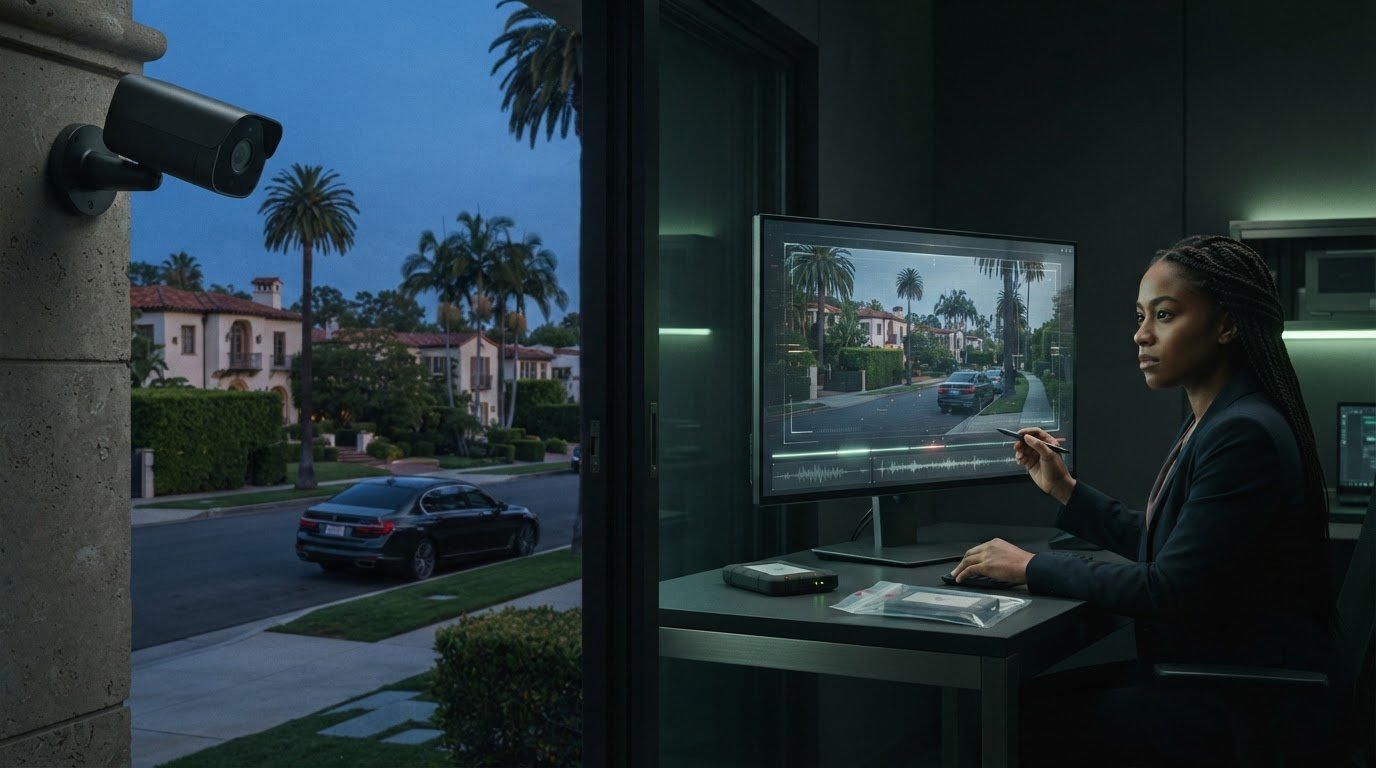
Exterior camera coverage works best when views follow the property’s actual approach paths. Start at the street-facing boundary, then map gates, parking entrances, service doors, and gathering areas. For each view, identify what staff need to recognize, such as someone approaching a restricted door, a vehicle entering a lot, or guests arriving for an event. Mapping the perimeter helps reveal blind spots before equipment placement is decided.
Part-time coverage can leave predictable gaps, such as an entrance used before staff arrive or a loading area active after closing. Establish a baseline by identifying when each exterior zone is occupied, who reviews alerts, and how staff escalate an event. Cameras support awareness, but the plan also needs a clear response for each alert. For example, a designated employee can assess the affected entrance and follow the site’s incident procedure.
A site-specific approach tailors coverage to the property’s layout and activity. A commercial property with several buildings may need distinct views of each approach, shared walkway, and vehicle entrance. A private estate may instead prioritize the outer perimeter, guest arrival route, and spaces where occupants gather. For a security plan for commercial property in Beverly Hills, account for the site’s distinct approaches and neighboring properties when positioning each view.
Round-the-clock estate coverage means planning for the property to remain monitored across day and night, including quiet periods. Around-the-clock coverage is available for Beverly Hills estate security, but the plan still needs to define who receives alerts and what steps follow. For commercial sites, decide whether overnight monitoring should focus on perimeter activity, a specific entrance, or critical areas. Review the plan when operating hours or site use changes.
Owner travel changes a property’s routine. Before departure, identify who is authorized to enter, how guests should arrive, and who handles alerts while the owner is away. Keep access permissions aligned with the temporary arrangement, and ensure a trained point of contact understands the response sequence. A security plan for commercial property in Beverly Hills can also account for travel-related changes to staffing, access, and monitoring priorities.
To refine coverage, walk the perimeter during normal operations and again when the property is quiet. Note obstructed views, lighting changes, and routes used by staff, deliveries, or guests. A focused camera coverage plan can translate those observations into a more coherent layout, with each view serving a defined purpose.
Security patrols versus continuous on-site protection
Patrols make scheduled or mobile checks, while continuous on-site protection keeps personnel present at the property. Each approach addresses different coverage needs. Beverly Hills police response is often described as taking 6-10 minutes, so the plan should define what happens before responders arrive. Match deployment to operating hours, exposed entrances, and the time required to notice and report an incident.
Plan patrol routes around Beverly Hills streets, hillside approaches, and garages rather than drawing a simple loop. A patrol vehicle may cover a long driveway, while a foot patrol can inspect a garage entrance or pedestrian gate more closely. Note where sightlines narrow, where vehicles can enter, and which doors remain active after business hours. Give each route a purpose, such as checking a service entrance or confirming that a building is secured.
Predictable rounds can leave intervals when a location receives no attention. Vary the route sequence and timing while documenting required checks. For example, a patrol may inspect the garage before the loading area on one round, then reverse the sequence later. Randomization should never replace required site checks or clear reporting. Log arrival, departure, observations, and unresolved issues so supervisors can identify gaps in coverage.
Community gates and neighborhood patrols can help manage shared approaches, but they do not secure every private entrance. A staffed gate may control vehicle access while leaving pedestrian routes, service doors, or individual garages outside its view. Define the boundary between community responsibility and the property’s own protection. Integrate shared patrol reports with site procedures, and identify who handles an event inside the property line.
Continuous on-site protection may suit a property that needs a trained person present during active operations or overnight periods. Patrols may suit sites where mobile checks address defined risks without a fixed post. For an executive or owner seeking personal protection, individual movement and property security are separate planning needs. State whether an assignment covers a building, an individual, or both, then set reporting and escalation responsibilities.
For Beverly Hills Police Department alarm registration and false alarms, include the applicable registration instructions and false-alarm procedures in the site plan. Record the responsible account contacts, who verifies an activation, and how staff communicate whether an event is cancelled or verified. Keep these steps accessible to the people responsible for opening, closing, and responding to alerts.
Before deployment, map each post or patrol zone, define handoffs, and specify how an incident reaches the responsible supervisor. A garage check, for example, should state which entrances are inspected and how an unsecured door is reported. Review assignments when tenants, operating hours, or neighborhood access patterns change. This keeps the patrol plan aligned with the property’s actual use rather than a generic route.

Armed and unarmed security officers
Choose an officer role by matching the assignment to the property’s documented risks, operating pattern, and response needs. An unarmed post may suit a staffed lobby focused on visitor direction and access procedures. An armed assignment involves a different level of risk and responsibility, so define its purpose, supervision, and escalation procedures before deployment. Base the decision on a specific threat assessment, not appearance alone.
For either option, document the post’s responsibilities and limits. A Beverly Hills commercial office may need an officer to observe entrances, communicate with management, and document incidents. A site facing a specific threat may require a different deployment plan and closer coordination with emergency procedures. State who receives reports, who makes operational decisions, and how the officer responds when an event exceeds the post’s scope.
California Business and Professions Code § 7582.3 makes acting or holding oneself out as a private patrol operator without a license a misdemeanor. That rule matters when reviewing an arrangement involving private security or patrol services. Keep vendor credentials, assigned duties, and supervision responsibilities aligned. The plan should distinguish an officer’s role from police response, building management, and emergency services.
Armed security details need particularly clear coordination. Define the assignment location, permitted duties, supervisor, communication channel, and steps for reporting a perceived threat. For example, an executive arriving at a Trousdale property may have movement needs that differ from those at a staffed commercial lobby in Beverly Hills. Treat personal protection and site coverage as separate functions, then coordinate communications and arrival procedures when both apply.
Before selecting armed coverage, identify the threat the assignment is intended to address and how the officer should respond if conditions change. A written escalation sequence can specify when to notify a supervisor, restrict access, or follow the property’s emergency response plan. Keep instructions focused on observation, communication, and approved duties. Avoid vague post orders that leave officers and property staff uncertain about their responsibilities.
Unarmed coverage also requires disciplined procedures. At a public-facing property, an officer might direct visitors, observe activity, and report access concerns to the designated manager. Define what happens during shift handoffs, planned events, and changes in occupancy. These details help maintain consistent coordination without suggesting that an officer replaces alarms, access controls, or emergency responders.
Review the choice whenever property use or the assessed threat changes. A new tenant, executive visit, or revised operating schedule can alter post responsibilities. Document the reason for the selected approach, the response chain, and the supervisor responsible for reviewing performance. Clear criteria make the decision explainable and keep each assignment connected to the property’s security objectives.
24/7 Supervision and security deployment
Continuous deployment requires more than assigning someone to a site. Define who supervises each post, how staff communicate, and who handles incidents during every handoff. For a Beverly Hills commercial property, map coverage against opening hours, deliveries, tenant activity, and quiet periods. Document who receives alerts, who makes operational decisions, and how unresolved issues move to the next supervisor.
A 24/7 residential security program is described as keeping at least one trained protector on the property at all times. That example illustrates the staffing commitment continuous presence requires, but commercial deployment should reflect its own duties and site layout. A staffed lobby, service entrance, and parking area may need different assignments. Specify which posts must remain occupied and which tasks can be handled through scheduled checks.
Shift design affects continuity. A 12-hour shift is one example used for a 24/7 residential program, with a 3-on/4-off schedule followed by a 4-on/3-off schedule as an example rotation. These examples help explain why handoffs need careful planning. At each changeover, the outgoing person should brief the incoming person on open incidents, access changes, equipment issues, and expected activity.
Supervision should create a clear communication chain without adding unnecessary complexity. Give each post a named supervisor and a defined method for reporting routine observations and urgent events. For example, a lobby officer who notices an unsecured service door should know whether to notify the property manager, the supervisor, or both. Record the event and its resolution so later shifts receive accurate information.
Deployment can balance discreet and visible security. A visible presence may support access management near a public entrance, while a discreet assignment may better suit a private area or sensitive activity. For a luxury property with household routines, establish which movements require coordination and which areas should remain undisturbed. At a commercial site, align post visibility with tenants, guests, and business operations.
Review deployment whenever occupancy, operating hours, or site activity changes. A scheduled event, tenant move, or temporary closure can shift where supervision is most useful. Update post orders and communication contacts together, then brief affected staff before the change takes effect. This keeps the written plan aligned with actual operations rather than outdated assignments.
For a coordinated approach to site coverage, plan integrated security supervision around your property’s activity, technology, and response procedures.
Digital-Vision.AI: Video Surveillance Systems
Digital-Vision.AI helps commercial properties in Beverly Hills, Orange County, and Irvine align video surveillance with access and alarm requirements. Its Video Surveillance Systems use high-definition cameras with intelligent analytics, while Access Control Solutions support biometric and RFID technology. Alarm Services can complement these systems, and Integration Services bring security components together in a coordinated infrastructure.
Consider these solutions when a property assessment identifies camera coverage gaps, disconnected systems, or access points that need more controlled entry. A considered design can connect the site’s priorities with practical security technology rather than treating each device as a separate decision.
Contact Digital-Vision.AI to discuss security technology for your commercial property.
Make Your Security Plan Adapt With Your Property
Treat a security plan for commercial property in Beverly Hills as a working framework, not a document that stays fixed after installation. Changes in tenants, building use, or business hours can alter how people move through the site. Review the plan as part of major operational changes, and update responsibilities when the people managing access or alerts change.
The next step is to identify which technology needs attention first. Digital-Vision.AI offers Video Surveillance Systems, Alarm Services, and Access Control Solutions to businesses in Beverly Hills, Orange County, and Irvine. These offerings can address specific needs identified in your property’s security priorities without assuming every site requires the same configuration.
Share your property’s priorities and discuss which systems fit its operational needs. Contact Digital-Vision.AI to explore a practical next step for your security planning. A considered approach can help you move forward with greater clarity and confidence.
Frequently Asked Questions
How do businesses in Beverly Hills assess security risks and conduct a property security audit?
Assess business risks by combining a site walkthrough with incident records and staff input. In Beverly Hills, review where access problems, property damage, or operational interruptions occurred, then compare those reports with current building use. Ask employees which procedures are difficult to follow during busy periods. For properties in Beverly Hills, Orange County, and Irvine, document findings for each site separately rather than assuming one location’s controls fit another.
What security cameras, access control, and alarm systems are best for commercial properties?
The right system depends on what it needs to accomplish. Decide whether a camera view should help identify activity at an entrance or monitor a work process, then assess whether staff can review the footage effectively. Match access permissions to job responsibilities and temporary assignments. For alarms, consider how zones align with the property’s opening and closing sequence, so routine staff activity does not conflict with the monitoring plan.
Should a Beverly Hills commercial property use armed or unarmed security guards?
Choose based on the documented threat, the officer’s assigned duties, and the environment where the post operates. An unarmed role may suit visitor-facing duties, while an armed assignment requires defined responsibilities, supervision, and escalation procedures. California Business and Professions Code § 7582.3 makes acting or holding oneself out as a private patrol operator without a license a misdemeanor. Keep the selection rationale and post instructions aligned.
What insurance and liability risks should commercial property owners consider when hiring security?
Owners should review how an agreement allocates responsibility for incidents, property damage, and errors in assigned duties. Compare the stated work with insurance documentation, and clarify who is responsible for reporting claims or preserving incident records. For example, an agreement covering an entrance post should define that post’s duties and reporting chain. Ask legal and insurance advisers to assess how the agreement fits the property’s risk profile.


Comments