


Access Control Installer: A 2026 Guide to Secure Identity Management
What if your property recognized your identity before you even reached for a key or a smartphone? For many estate owners and facility managers in Southern California, the traditional burden of managing physical keys and outdated entry codes is becoming a significant security liability. It's frustrating to deal with legacy systems that fail to integrate with modern technology, leaving you with gaps in your perimeter and a lack of real-time oversight. Finding the right access control installer is no longer just about mounting hardware; it's about partnering with a strategic guide who understands how to leverage AI to create a truly frictionless experience.
We agree that security should empower your lifestyle rather than complicate it. This guide provides a comprehensive roadmap for choosing a professional who can fortify your property with AI-verified identity solutions that offer both unmatched precision and ease of use. You'll learn how to navigate the 2026 regulatory landscape, including the latest CPRA requirements for biometric data, and discover how centralized management can provide total peace of mind. We're moving beyond simple locks into an era of intelligent, unified security ecosystems tailored for the unique demands of the Beverly Hills and Orange County markets.
Table of Contents
Why Choosing a Professional Access Control Installer Matters in 2026
Evaluating Modern Authentication: Biometrics, RFID, and AI Facial Recognition
System Design for Estates and Commercial Facilities in Southern California
From Design to Deployment: The Professional Installation Process
Digital-Vision.AI: Strategic Access Control Integration in Beverly Hills and OC
Why Choosing a Professional Access Control Installer Matters in 2026
Property defense is no longer a matter of simply bolting hardware to a door frame. In 2026, a professional access control installer views your entry points as data-rich nodes within a broader digital ecosystem. While a traditional locksmith focuses on the physical integrity of a mechanical lock, a security systems integrator ensures that your access control systems are seamlessly woven into your digital network infrastructure. This distinction is critical because modern security relies on the intelligent verification of identity, not just the physical prevention of entry. By prioritizing a strategic installation, you gain total control over who enters your space and when they do so.
Entrusting your security to a specialist provides the peace of mind that comes from knowing every vulnerability has been addressed. A professional installer doesn't just mount a reader; they architect a solution that balances rigorous protection with user convenience. This expertise is particularly vital as the complexity of integrated AI and cloud connectivity demands a sophisticated understanding of both physical and digital landscapes. When you choose a partner who specializes in high-end integration, you're investing in a visionary guardian for your property.
The Evolution of Physical Security
Physical security has transitioned from passive mechanical keys to intelligent, cloud-based identity management. AI has fundamentally transformed these systems into proactive security tools that can detect anomalies before a breach occurs. In luxury residential estates and high-end commercial sectors across Southern California, there's a clear shift toward frictionless entry. This technology allows authorized individuals to move through a facility without stopping to present credentials. By leveraging facial geometry or encrypted mobile tokens, you maintain a high security posture without the inconvenience of traditional methods. This evolution ensures that your security system is an asset to your daily operations rather than a bottleneck.
Risks of Non-Professional Integration
Choosing an unqualified access control installer introduces significant vulnerabilities that often go unnoticed until a failure occurs. High-end hardware requires white-glove technical calibration to function correctly within a unified environment. Without professional oversight, you risk creating siloed systems where your door controllers don't communicate with your cameras or alarm services. Improperly configured network settings or unpatched software can leave backdoors open to digital intrusion. System downtime is another major risk; if a system isn't integrated correctly, a minor software glitch can lead to a total lockout or a complete failure of the locking mechanism. Professional integration ensures that fail-safes are in place and that the system remains resilient under all conditions.
Evaluating Modern Authentication: Biometrics, RFID, and AI Facial Recognition
Choosing the right authentication method is a pivot point in property design. A professional access control installer analyzes your specific traffic patterns to determine whether biometric, RFID, or mobile credentials offer the best balance of defense and fluidity. This selection process aligns with the NIST definition of PACS, which emphasizes the management of access to and within sensitive areas. While estates often prioritize the invisible security of facial recognition, commercial offices might favor the high-volume reliability of encrypted tokens.
The Rise of Biometric and Facial Recognition
AI-driven facial recognition has emerged as the gold standard for luxury estates in Beverly Hills and high-security corporate environments. These systems utilize sophisticated AI analytics to identify authorized individuals without requiring them to touch a reader or dig for a phone. To ensure total integrity, 2026 systems employ advanced liveness detection. Biometric liveness detection is a security protocol that distinguishes between a real human presence and a spoofing attempt, such as a high-resolution photo or a 3D mask. This proactive layer ensures that identity verification remains absolute, even in the face of evolving artificial threats.
RFID and Mobile Access: The Reliable Standard
RFID technology remains a staple for commercial building access because of its proven durability and ease of deployment across large workforces. However, the shift toward mobile credentials via encrypted Bluetooth or NFC is accelerating. Smartphones offer a level of convenience that physical cards can't match, as users rarely forget their devices. While physical RFID tags are nearly indestructible, digital credentials provide superior flexibility for temporary access or remote revocation. If you're considering an upgrade, a specialized access control installer can help you integrate these reliable secondary options into a unified platform.
Integrating these high-tech solutions requires a deep understanding of data privacy. As of January 1, 2026, California regulations under the CPRA classify biometric data as sensitive personal information, requiring businesses to provide clear notice at collection and allow for opt-out rights. A professional installer ensures your system isn't just secure from intruders, but also compliant with legal standards for data protection. This dual focus on technical excellence and regulatory adherence provides the long-term reliability required for sophisticated Southern California properties.
System Design for Estates and Commercial Facilities in Southern California
Designing a security architecture in Southern California requires more than a one-size-fits-all approach. A professional access control installer understands that a sprawling estate in Beverly Hills has fundamentally different requirements than a high-density office park in Irvine. These systems must be engineered to withstand local environmental stressors while maintaining the aesthetic integrity of the property. For coastal projects in Orange County, hardware must be rated for corrosive salt air, whereas inland installations require thermal management to handle extreme heat. Maintaining aesthetic harmony is equally critical; modern hardware is now designed to complement architectural styles ranging from mid-century modern to contemporary minimalism, ensuring that security never detracts from your property's visual appeal.
Residential Estate Security Requirements
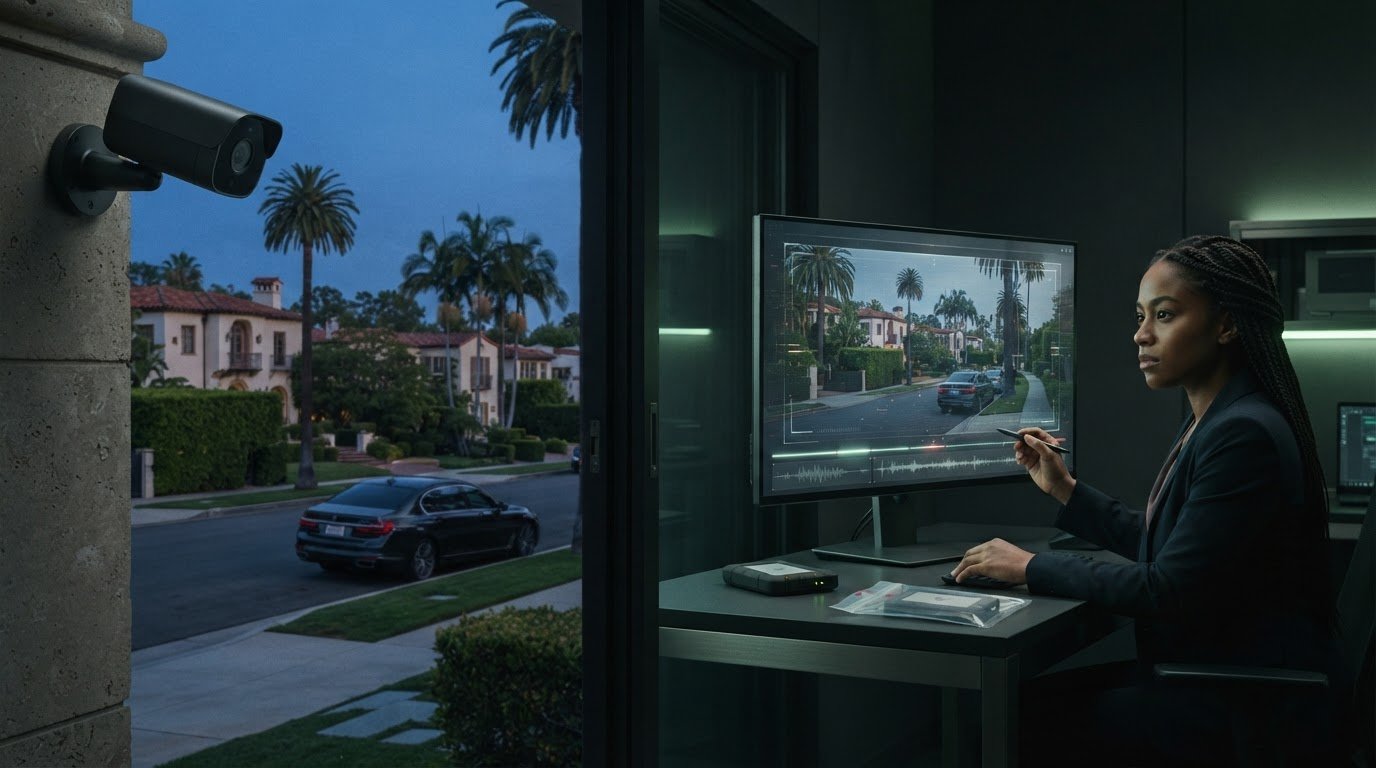
Managing the flow of domestic staff, service deliveries, and private guests is a primary challenge for estate owners. A sophisticated system integrates perimeter gates with main house entry points to create a layered defense, ensuring that a visitor verified at the gate is tracked until they reach their destination. We emphasize the importance of premium AI security camera installation in Beverly Hills as a visual verification layer that works in tandem with identity management. By leveraging edge computing to keep data processing localized, you maintain the high level of privacy expected in luxury residential sectors. This approach ensures your security remains a private, invisible guardian of your lifestyle.
Commercial and Multi-Site Management in Irvine
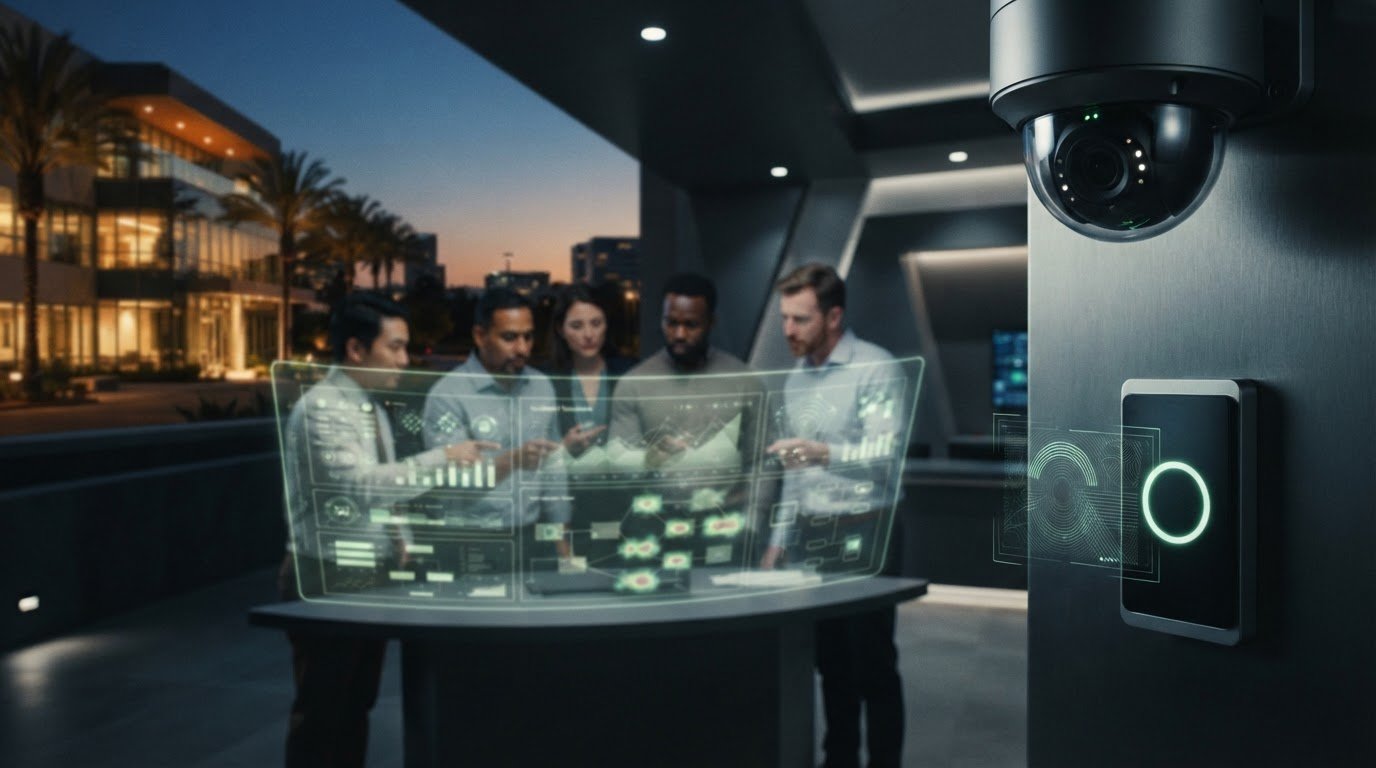
Scalability is the cornerstone of modern commercial security. For businesses operating across multiple locations in Irvine and beyond, centralized management allows for the synchronization of hundreds of users from a single, intuitive interface. A strategic access control installer configures these platforms to provide detailed audit trails that are essential for internal accountability and regulatory compliance. Following best practices for facility access control ensures that your organization meets federal-grade standards for reliability and resilience. Effective design also involves integration with commercial alarm system installation in Southern California to provide a unified, automated response to unauthorized entry attempts. This level of synchronization optimizes your security posture while reducing the administrative burden on your facility management team.

From Design to Deployment: The Professional Installation Process
Deploying a high-tier security ecosystem requires more than just technical skill; it demands a disciplined, 5-stage methodology. A professional access control installer manages the transition from conceptual architecture to physical reality through Assessment, Design, Install, Config, and ongoing Support. This structured progression ensures that your investment in advanced identity management delivers the promised peace of mind without technical friction. By following a rigorous deployment schedule, we eliminate the gaps that often plague DIY or non-specialized setups.
Phase 1: Strategic Security Assessment
The journey begins with a site vulnerability assessment, a phase that acts as the foundation for the entire project. This isn't a mere walkthrough; it's a deep diagnostic process where we identify weak points in both the physical perimeter and the supporting digital network. During this stage, we define specific user personas to determine exactly who goes where and when. For instance, a residential estate might require distinct access levels for family members, domestic staff, and occasional service vendors to maintain total privacy. Conducting a local assessment in Beverly Hills or Irvine is vital for insurance compliance, as underwriters for high-value properties often demand documented proof of professional security audits before issuing or renewing coverage.
Phase 2: Hardware Installation and Software Configuration
Once the strategic roadmap is set, the physical deployment begins. This involves the white-glove mounting of biometric scanners, mag-locks, and sophisticated door controllers. A specialized access control installer doesn't just attach hardware; they calibrate every component to ensure total precision. We configure AI analytics at this stage to enable real-time threat detection at every entry point, allowing the system to distinguish between authorized movement and suspicious behavior. We also prioritize seamless mobile app integration, empowering you with remote management capabilities that are both intuitive and secure.
To finalize the deployment, the system undergoes exhaustive hardware testing and network stress-testing. We verify that every access point remains responsive even during high-traffic periods or network fluctuations, ensuring zero latency in identity verification. The process concludes with personalized training for property managers and homeowners. We ensure you're fully equipped to manage your new unified ecosystem with total confidence. If you're ready to fortify your property with a professionally engineered solution, request your strategic security consultation to begin the assessment phase.
Digital-Vision.AI: Strategic Access Control Integration in Beverly Hills and OC
Digital-Vision.AI positions itself as more than a vendor; we are a visionary guardian for your most valuable assets. While many providers focus on individual components, our philosophy centers on the Unified Security Ecosystem. This approach ensures that every access point, sensor, and camera works in perfect synchronization to provide a comprehensive picture of your property's status. By choosing a specialized access control installer with a focus on AI integration, you're investing in a system that grows more intelligent over time, adapting to new threats while maintaining a frictionless experience for authorized users. Our role is to serve as a strategic guide, helping you navigate the complexities of modern identity management with total confidence.
The Digital-Vision.AI Difference
Our methodology leverages AI to transform traditional entry points into proactive intelligence hubs. We believe that security should be felt, not seen, which is why we place a heavy emphasis on aesthetic excellence and architectural integration. Our technicians ensure that biometric readers and hardware are installed with a level of precision that complements the design of your estate or office. This commitment to quality extends to our white-glove service model. We provide a dedicated partnership that begins with a deep-dive consultation and continues through deployment with 24/7 technical support and proactive maintenance to ensure your system never experiences downtime. This proactive support model means we often identify and resolve technical issues before they can impact your property's accessibility.
Securing Your Southern California Property
Local expertise is the bedrock of our service in the Beverly Hills, Irvine, and Orange County markets. Understanding the specific security requirements of these high-profile areas allows us to provide faster response times and more relevant strategic advice. Our portfolio reflects our experience with high-net-worth residential estates and premium commercial facilities that demand the highest levels of discretion and technical sophistication. We understand that your security needs are unique, requiring a customized architecture that respects your privacy while providing uncompromised protection. Our team is deeply familiar with the local regulatory environment, ensuring that your installation remains fully compliant with California's evolving privacy standards.
Discover the difference that a dedicated security partnership can make for your facility. Contact Digital-Vision.AI for a Strategic Security Consultation today to schedule your free security assessment in Beverly Hills, Irvine, or Orange County. We're ready to help you optimize your property's defense with the latest in AI-powered identity management.
Elevating Your Property Defense for the Intelligent Era
Modern property security has evolved beyond the simple physical barrier; it's now an intelligent system of identity management. By partnering with a specialized access control installer, you're ensuring that your estate or commercial facility is protected by a unified ecosystem that balances rigorous defense with a frictionless user experience. From AI-driven facial recognition to localized data processing that respects California's stringent privacy laws, the right architecture provides both technological superiority and absolute reliability. You no longer have to choose between high-level security and daily convenience.
Digital-Vision.AI remains committed to fortifying high-net-worth estates and premium businesses throughout Beverly Hills, Irvine, and Orange County. Our team specializes in AI-powered security ecosystems and provides 24/7 proactive technical support to maintain your peace of mind. We invite you to take the first step toward a more secure, automated future. Schedule Your Free Security Assessment with Digital-Vision.AI to discover how we can optimize your property's identity management today. You deserve the confidence that comes from knowing your security is in the hands of a visionary guardian.
Frequently Asked Questions
What should I look for in a professional access control installer?
You should prioritize an access control installer with deep expertise in both physical hardware and digital network security. A professional partner doesn't just mount locks; they architect a unified ecosystem that integrates with your surveillance and alarm services. Ensure they have a local presence in Southern California to provide rapid maintenance and support. They should also demonstrate a clear understanding of the latest California privacy regulations to keep your data compliant and secure.
Can biometrics be integrated into my existing home security system?
Integration is often possible if your current infrastructure supports modern communication protocols like OSDP. A specialized access control installer can evaluate your legacy hardware to determine compatibility with AI-powered biometric readers. This process involves bridging your existing alarm services with new identity management software. By optimizing your current setup with biometric layers, you enhance your property's defense without requiring a complete system overhaul, providing a seamless transition to keyless entry.
How does AI facial recognition improve security over traditional keycards?
AI facial recognition significantly fortifies your perimeter by eliminating the vulnerabilities associated with physical credentials. Unlike keycards, which can be lost, stolen, or shared, your facial geometry is a unique, non-transferable identifier. These systems utilize liveness detection to prevent spoofing attempts, ensuring that only authorized individuals gain entry. This technology also enables frictionless access, allowing you to move through your property without pausing to present a card or smartphone for verification.
Is an internet connection required for modern access control systems?
While modern systems leverage the cloud for remote management and updates, an active internet connection isn't always required for local door operations. High-end installations often utilize edge processing, which allows biometric and RFID verification to occur locally on the controller. This architecture ensures that your property remains secure even during a network outage. However, you'll need connectivity to access real-time audit logs or to revoke credentials through your mobile application.
What happens to the access control system during a power outage?
Professional installations include dedicated battery backup units that empower the system to remain operational during a power failure. Depending on your specific safety requirements, doors can be configured as fail-safe or fail-secure. Fail-safe locks automatically release during an outage to allow for emergency egress, while fail-secure locks remain locked to maintain a secure perimeter. Your installer will help you balance these settings to ensure both occupant safety and property protection.
How long does a typical professional installation take for a commercial building?
The duration of a deployment depends on the number of access points and the complexity of the integration. For a mid-sized commercial office in Irvine, a professional installation typically takes between three and five business days. This timeframe includes the physical mounting of hardware, network configuration, and the stress-testing of the AI analytics. A structured 5-stage deployment process ensures that every component is calibrated correctly before the system is handed over for daily usage.
Can I manage multiple properties from a single access control app?
Centralized management is a hallmark of modern cloud-based solutions, allowing you to oversee multiple locations from a single, intuitive interface. Whether you're managing a Beverly Hills estate and an Orange County office, you can monitor entry logs and update user permissions in real-time. This capability empowers facility managers to handle security remotely, providing total control over diverse geographic sites. It's an ideal solution for high-net-worth individuals and businesses with multi-site Southern California operations.
Are biometric access systems compliant with California privacy laws?
Biometric systems are compliant with California law provided they adhere to the requirements set forth in the CPRA. As of January 1, 2026, businesses must provide clear notice at the point of collection and allow individuals to opt-out of biometric data storage. A professional installer ensures your system architecture supports these privacy mandates by encrypting sensitive information and localizing data processing where possible. Compliance protects your organization from legal liability while maintaining high-tech security standards.

Comments