


Commercial Alarm System Installation in Southern California: The 2026 Security Checklist
Updated: Aug 25
What if your security system could distinguish between a stray animal and a sophisticated intruder before an entry point is even breached? For most business owners, the reality of commercial alarm system installation in Southern California has long been defined by fragmented hardware and the persistent frustration of false alarms. You've likely accepted these inefficiencies as an unavoidable cost of doing business, yet you recognize that a reactive system is no longer sufficient to protect high-value assets in an increasingly complex environment.
This guide provides the strategic clarity you need to move beyond legacy hardware. We promise a comprehensive checklist for designing a unified, AI-powered security ecosystem that offers total control and unmatched precision. We'll explore the latest 2025 California Fire Code updates, the integration of biometric access control, and how AI analytics can virtually eliminate the noise of traditional monitoring. By the end, you'll have a definitive roadmap to fortifying your property with the next generation of protective technology.
Table of Contents
Assessing Your Southern California Commercial Security Needs
The AI-Powered Alarm Checklist: Essential Components for 2026
Beyond the Siren: Integrating Alarms with Video and Access Control
Choosing a Commercial Alarm Installer in Southern California
Securing Your Assets: The Digital-Vision.AI Implementation Blueprint
Assessing Your Southern California Commercial Security Needs
Designing a resilient defense begins with a granular understanding of your physical footprint. In regions like Beverly Hills or Irvine, commercial architecture often features expansive glass facades or complex multi-level layouts that present unique vulnerabilities. You must identify high-value assets, such as server rooms or high-end inventory, and map every critical entry point. A modern security alarm system isn't a one-size-fits-all solution; it's a tailored response to your specific operational risks. Determining your required response time is a critical variable. A delay of even sixty seconds can be the difference between a prevented loss and a total breach.
Evaluating local risk factors is equally vital. The security needs of a high-end retail boutique in Orange County differ significantly from a logistics hub in San Bernardino. Beyond physical theft, you should analyze your existing infrastructure to see if it supports AI-powered upgrades. Older analog systems often lack the bandwidth for edge-based analytics, making a comprehensive audit the first step in any commercial alarm system installation Southern California project. You need to know if your current cabling can power high-definition sensors or if a full digital overhaul is required to meet 2026 standards.
Defining Your Security Objectives
Effective security goes beyond simple intrusion detection. You need to differentiate between basic alerts and a comprehensive loss prevention strategy that leverages real-time data. This involves establishing compliance with local SoCal regulations and insurance mandates, which often require specific monitoring standards to maintain coverage. When setting a budget, it's essential to account for both the initial hardware and the long-term maintenance required to keep AI models optimized and sensors calibrated. A visionary approach ensures that your system evolves alongside emerging threats rather than becoming obsolete.
The Local Landscape: Why SoCal Businesses Need More
Southern California's high-density areas, particularly Los Angeles and Orange County, face unique challenges regarding false alarm responses. Many local municipalities require verified alarm protocols before law enforcement will prioritize a dispatch, especially since false alarms can generate fines averaging $150 per incident. Because the landscape is so competitive, a successful commercial alarm system installation Southern California relies on understanding these local nuances. Regional crime trends suggest that sophisticated intruders now use techniques designed to bypass traditional sensors, necessitating a shift toward unified, AI-driven ecosystems. A precise, local security assessment serves as the foundational blueprint for any organization seeking to achieve a state of total control in 2026.
The AI-Powered Alarm Checklist: Essential Components for 2026
Modern security is no longer about responding to a breach after it occurs; it's about leveraging technology to prevent the incident entirely. For a robust commercial alarm system installation Southern California businesses must prioritize components that offer both high-level intelligence and operational redundancy. Moving beyond the fragmented hardware of the past, 2026 standards demand a unified approach where every sensor contributes to a larger, data-driven picture of your property's safety. This proactive posture transforms your security from a passive expense into a strategic asset.
A comprehensive 2026 checklist includes several non-negotiable features:
Edge-Based AI Analytics: Sensors that process data locally to identify threats in real-time.
High-Definition Video Verification: Visual confirmation of alerts to eliminate costly false dispatches.
Cloud-Based Management: Centralized oversight for multi-site operations from any mobile device.
Dual-Path Communication: Combined Cellular and IP paths to ensure 100% signal uptime.
Environmental Integration: Sensors for fire, water leaks, and temperature fluctuations within a single interface.
Advanced Sensor Technology
Intelligent sensors represent the forefront of intrusion detection by utilizing deep learning to distinguish between human movement and environmental noise, such as stray animals or swaying foliage. This precision is particularly valuable for retail storefronts in high-traffic Southern California corridors, where glass-break and vibration sensors provide an essential early-warning layer. In high-security zones, integrating biometric facial recognition ensures that only authorized personnel can bypass active zones, creating a truly fortifying barrier. If you are unsure which sensors fit your layout, a specialized security assessment can help tailor these choices to your specific risks.
Control Panels and User Interfaces
The control hub of a modern system has shifted from clunky keypads to mobile-first, touch-screen interfaces that prioritize user experience. These panels provide detailed audit trails, allowing you to monitor employee management through user-specific codes and real-time access logs. When selecting hardware, it's vital to verify compliance with the UL 2610 standard for commercial premises security. This ensures your system meets rigorous cybersecurity encryption requirements, protecting your network from sophisticated digital intrusion techniques. By choosing 2026-compliant firmware, you empower your business with a system that is as resilient against cyber threats as it is against physical ones.
Beyond the Siren: Integrating Alarms with Video and Access Control
A standalone alarm is a legacy concept that no longer meets the demands of a high-stakes business environment. True protection in 2026 is found within a unified security ecosystem, where disparate hardware components communicate in real-time to form a proactive shield. For a sophisticated commercial alarm system installation Southern California, the goal is to eliminate silos between your sensors, cameras, and entry points. This integration allows for a single-pane-of-glass management platform, reducing operational friction and giving you total control over your property from a single interface.
Integrating these systems requires a deep understanding of California's licensing structure, ensuring your partner is qualified to handle both low-voltage systems and sophisticated network protocols. When these elements are synchronized, your security data becomes a centralized asset. This data doesn't just record events; it informs future security consulting and assessments, allowing you to optimize your defensive posture based on actual behavioral patterns and identified vulnerabilities within your specific SoCal facility.
The Power of Video Verification
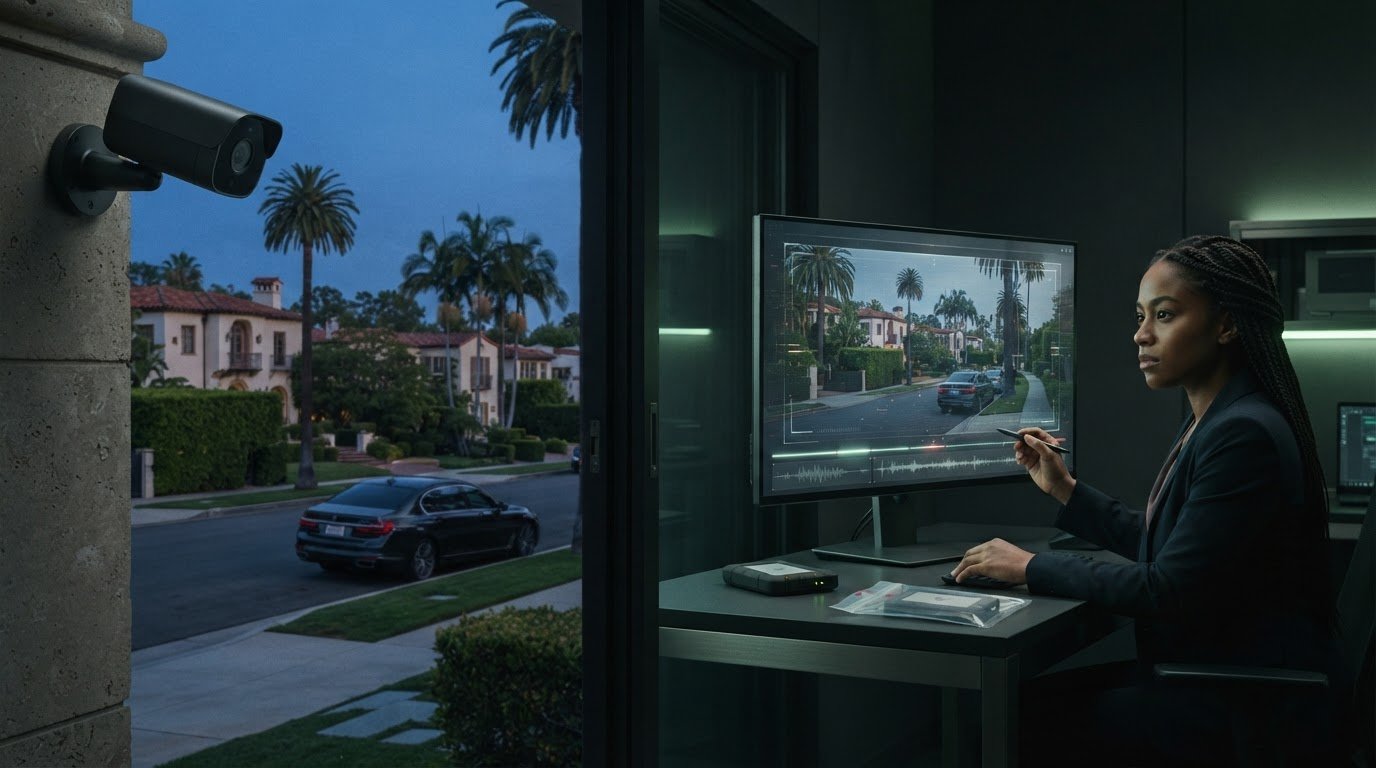
When an AI security camera installation in Beverly Hills is unified with your alarm system, the cameras act as the intelligent eyes of the operation. The workflow is seamless: a perimeter sensor trips, and the system instantly triggers a nearby AI-powered camera to analyze the zone. Within seconds, you receive a high-definition video alert on your smartphone, allowing you to verify the threat before authorities are even dispatched. Implementing real-time threat detection significantly reduces liability for business owners by providing indisputable evidence and preventing incidents before they escalate into legal or financial crises.
Access Control Synergy
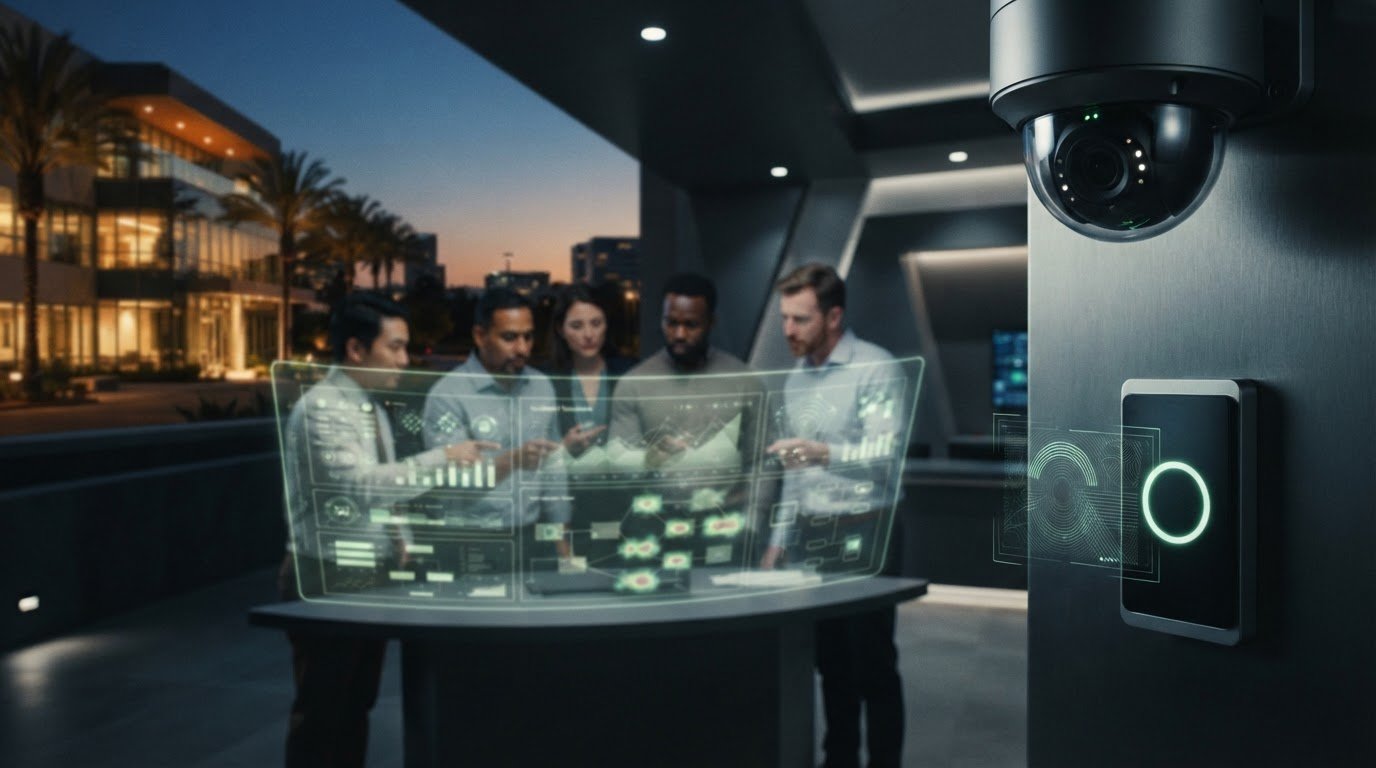
Access control serves as your first line of defense, but its true power is unlocked when paired with alarm triggers. By leveraging RFID and biometric readers, you can establish strict high-security zones that automatically fortify during an incident. For example, a triggered alarm event can initiate an immediate lockdown of all external entry points while simultaneously activating facial recognition tracking in common areas to monitor the movement of unauthorized individuals. You can manage visitor access remotely via integrated mobile apps, ensuring that your facility remains secure without hindering the flow of daily business operations. This level of automation transforms your security from a passive alert system into an active, visionary guardian of your assets.

Choosing a Commercial Alarm Installer in Southern California
Selecting a partner for your commercial alarm system installation Southern California is a decision that dictates the long-term resilience of your property. You shouldn't settle for a vendor that simply hangs hardware on a wall. Instead, seek a strategic consultant who understands the nuances of AI-powered video surveillance and access control. This begins with verifying that the installer holds a valid Alarm Company Operator (ACO) license from the California Bureau of Security and Investigative Services (BSIS) and a C-7 Low Voltage Systems Contractor license. These credentials are the baseline, but the true differentiator is their mastery of high-end, unified ecosystems.
Beyond licensing, you must evaluate the quality of their initial consulting and assessment process. A visionary partner will perform a deep-dive vulnerability review before suggesting a single piece of hardware, ensuring the solution is tailored to your specific architectural and operational risks. They should demonstrate a proven track record with high-end hardware and show how they've leveraged AI to solve complex security challenges for other clients. This level of precision ensures that your investment provides the technological superiority required to stay ahead of modern threats.
Key Questions for Your Potential Partner
When evaluating a security firm, you need to look beyond the sales pitch. Ask if they've handled complex multi-site installations across Orange County and Irvine, as these projects require a higher level of network coordination and strategic planning. You should also clarify if they provide 24/7 technical troubleshooting or if their support ends at basic alarm monitoring. In 2026, the cybersecurity of your hardware is as vital as physical protection. Inquire about their specific protocol for handling firmware updates and cybersecurity patching for AI-driven sensors; to ensure your entire business network is fortified against digital threats, you can learn more about Cloud Choice Technologies. A partner who lacks a proactive maintenance and support contract leaves your business vulnerable to both hardware failure and digital intrusion.
The Importance of Local Expertise
Proximity is a functional necessity for high-priority commercial properties. Having a partner based in Beverly Hills or Irvine ensures rapid on-site support when a system requires immediate attention. Local expertise also means a deep familiarity with Southern California building codes and the specific requirements for fire alarm integration. High-net-worth commercial clients often have unique operational needs that a generic national provider cannot meet. You deserve a consultant who understands the local risk landscape and can design a system that offers peace of mind without compromising aesthetic or operational flow. To start this process with a specialist who prioritizes precision, you can schedule a comprehensive security assessment to identify your facility's specific vulnerabilities.
Securing Your Assets: The Digital-Vision.AI Implementation Blueprint
Implementing a sophisticated security posture requires more than just high-end hardware; it demands a methodical, five-step blueprint designed to eliminate gaps and ensure operational continuity. At Digital-Vision.AI, we approach every commercial alarm system installation Southern California project as a strategic partnership. This process begins with a comprehensive security vulnerability review, where we identify physical and digital weak points that traditional vendors often overlook. To streamline the documentation of these site visits, you can discover PHOTO iD, which automates photo labeling for property inspections. Following the assessment, we custom-design a unified security ecosystem that integrates AI-powered alarms with biometric access control and video surveillance.
Our certified AI security specialists handle the professional installation phase, ensuring every component is optimized for your facility's unique environment. Once the hardware is in place, we facilitate deep integration and staff training on your new management platform, empowering your team to use the system with confidence. The final stage involves ongoing maintenance and proactive health checks, ensuring that your defense remains resilient against evolving threats. This structured approach transforms a complex technological transition into a seamless enhancement of your business operations.
White-Glove Design and Installation
High-end properties in Beverly Hills and Orange County require a level of aesthetic integration that standard installers cannot provide. Our white-glove service ensures that AI cameras and sensors are placed with surgical precision, offering maximum coverage without disrupting the architectural integrity of your building. We don't just mount devices; we fortify your perimeter through rigorous testing of all alarm triggers and notification paths. By simulating real-world breach scenarios, we verify that your system responds exactly as intended before we consider the project complete. This attention to detail provides the technological superiority necessary to protect high-value assets in Southern California's most competitive markets.
Long-Term Partnership and Support
A visionary security system is never static. Digital-Vision.AI remains your dedicated consultant, staying at the forefront of AI innovation to ensure your business leverages the latest advancements in threat detection. Our technical support contracts include recurring maintenance and proactive firmware patching, protecting your investment from both hardware degradation and cyber vulnerabilities. We believe that peace of mind is earned through consistent performance and elite-level support. To begin fortifying your property with a partner who prioritizes precision and technological superiority, schedule your free commercial security assessment with Digital-Vision.AI today.
Achieving Total Control Over Your Commercial Security
Modern security is no longer a passive measure; it's a strategic investment in precision. By prioritizing a unified ecosystem where AI analytics, video verification, and biometric access control converge, you move beyond legacy hardware. This proactive approach ensures that your facility is protected by 2026-standard technology that filters out noise and prioritizes real threats, granting you total situational awareness.
Choosing the right partner for your commercial alarm system installation Southern California is the final, most critical step. Digital-Vision.AI serves high-priority properties in Beverly Hills, Irvine, and Orange County with a focus on expert AI analytics configuration and comprehensive security consulting. We don't just install sensors; we provide ongoing maintenance and support to ensure your system remains at the forefront of innovation. It's time to transition from simple detection to a visionary guardian for your assets.
Secure your Southern California business with an AI-powered alarm system from Digital-Vision.AI
You've built your business with vision; protect it with the same level of foresight and technological superiority. We're ready to help you fortify your future.
Frequently Asked Questions
How does AI help reduce false alarms in a commercial setting?
AI significantly reduces false alarms by utilizing deep learning algorithms to differentiate between legitimate threats and environmental noise. Traditional sensors often trigger due to shadows or animals; however, AI analytics identify specific human or vehicular patterns. This precision ensures that law enforcement is only notified when a verified breach occurs. By filtering out non-threatening movement, you avoid the administrative burden and local fines associated with false dispatches.
Can I integrate my existing security cameras with a new alarm system?
Yes, most modern systems allow for the integration of legacy cameras through specialized encoders or network bridges. While a full commercial alarm system installation Southern California project often benefits from upgraded 2026-standard hardware, we can often leverage your existing infrastructure to create a hybrid solution. This approach preserves your initial investment while adding sophisticated AI-driven triggers and centralized management. It's a cost-effective way to transition into a more unified security posture.
What is the difference between a traditional alarm and a unified security ecosystem?
A traditional alarm operates as a reactive, standalone unit that merely sounds a siren upon contact. In contrast, a unified security ecosystem synchronizes alarms, video surveillance, and access control into a single, intelligent platform. This integration allows for automated responses, such as locking down entry points when a perimeter sensor is breached. It transforms fragmented hardware into a proactive shield, providing total control and real-time situational awareness across your entire property.
Do Southern California businesses require specific permits for alarm installation?
Southern California municipalities, including Los Angeles and Irvine, typically require businesses to obtain an alarm user permit. These regulations are designed to manage emergency response resources and often include penalties for excessive false alarms. You should check with your local police department or city hall to ensure compliance before completing your commercial alarm system installation Southern California. Maintaining valid permits is essential for ensuring that law enforcement prioritizes your facility during an actual emergency.
What happens if my internet goes down? Will my commercial alarm still work?
Your security remains intact because high-end systems utilize redundant communication paths. While the primary connection often relies on high-speed IP, a secondary cellular backup ensures that signals reach the monitoring center even during a total network failure. Additionally, many AI sensors process data locally at the edge, meaning they continue to detect threats without an active internet connection. This redundancy provides 100% uptime and peace of mind during local outages.
Are biometric access control systems secure enough for high-end commercial use?
Biometric systems offer a superior level of security because they rely on unique physical markers that cannot be shared or stolen like traditional keycards. Modern facial recognition and fingerprint scanners utilize advanced encryption to prevent spoofing, making them ideal for high-security zones in corporate offices or retail hubs. By integrating biometrics, you establish an indisputable audit trail of who enters your facility. This technology represents the gold standard for high-net-worth commercial property protection.
How often should a commercial security system undergo a professional assessment?
We recommend a comprehensive professional assessment at least once per year to ensure all components remain optimized. Technology evolves rapidly, and a yearly review allows you to identify hardware that may be nearing obsolescence or AI models that require calibration. Additionally, changes to your building's layout or operational flow can create new vulnerabilities. Regular consulting ensures that your unified ecosystem continues to provide the highest level of protection against emerging modern threats.
What are the benefits of cellular backup for commercial alarm systems?
Cellular backup serves as a vital safety net by providing a dedicated, tamper-resistant communication channel. If an intruder cuts your landline or your internet service provider experiences an outage, the cellular transmitter instantly takes over to send alerts. This ensures that your monitoring station receives critical data without interruption. It's a non-negotiable component for any Southern California business that requires consistent, high-level security and total operational reliability.

Comments